Politics, policy, profits - v2
The Sarawak Government's petition to the Federal Court marks a material escalation in the ongoing State-Federal dispute.
Petroleum poser
Disclaimer: By using this information, you hereby acknowledge that you are fully and solely responsible for evaluating the merits and risks of any investment decision and agree not to hold NewParadigm Research fully liable whatsoever for any actions, omissions and/or damages of any kind or matter arising from such decision.
Key takeaways:
- The Sarawak Government is moving to question the validity of the Petroleum Development Act 1974 and Petroleum Mining Act 1966.
- This is an escalation in the ongoing State-Federal dispute for control of Sarawak’s O&G resources and incrementally negative for the sector.
- The move may entrench the direction of travel, but the road to a Federal Court decision is long. In our view, a political settlement is a more likely outcome before the next election.
KL Energy Index | Parliamentary seats | Voters/seat
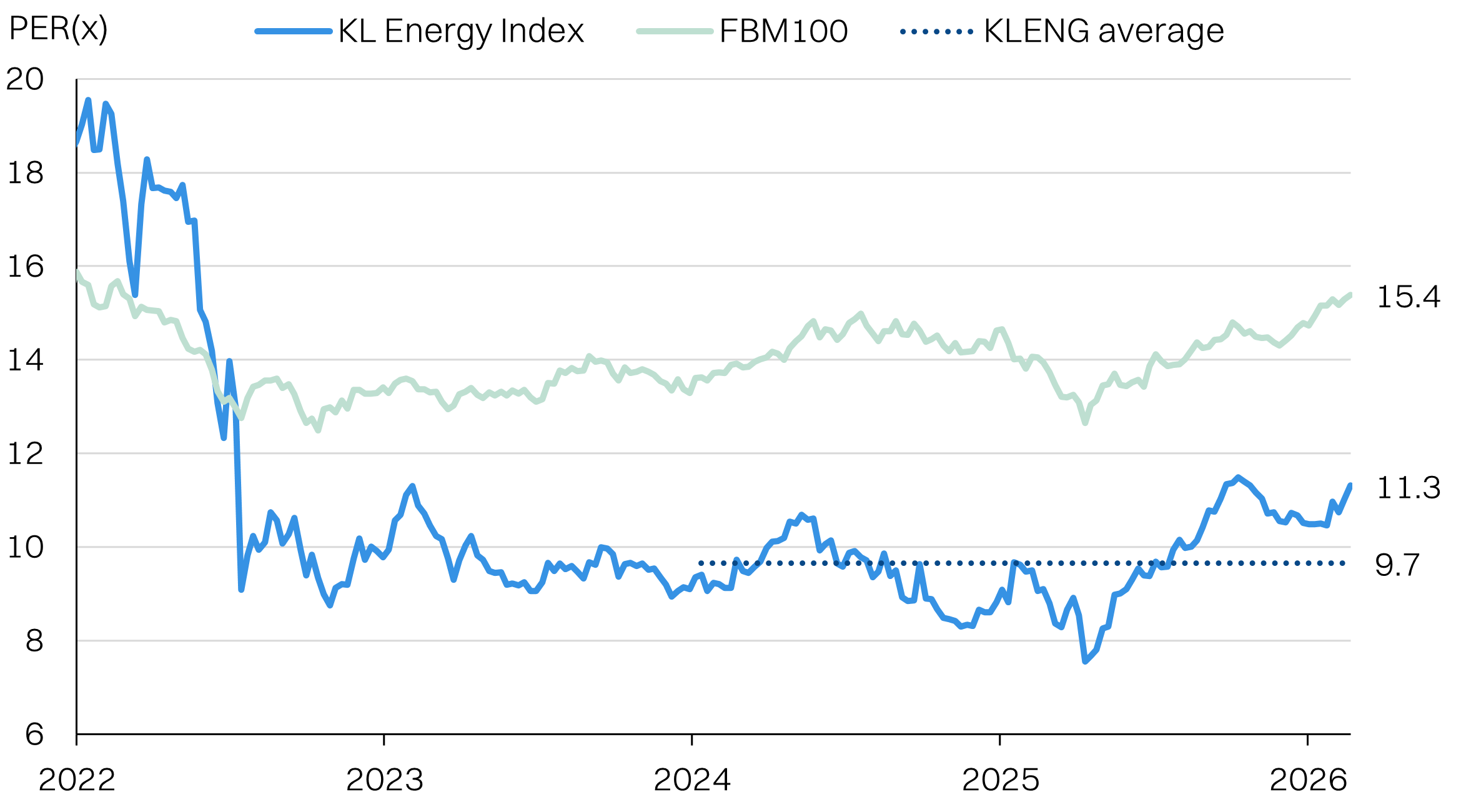
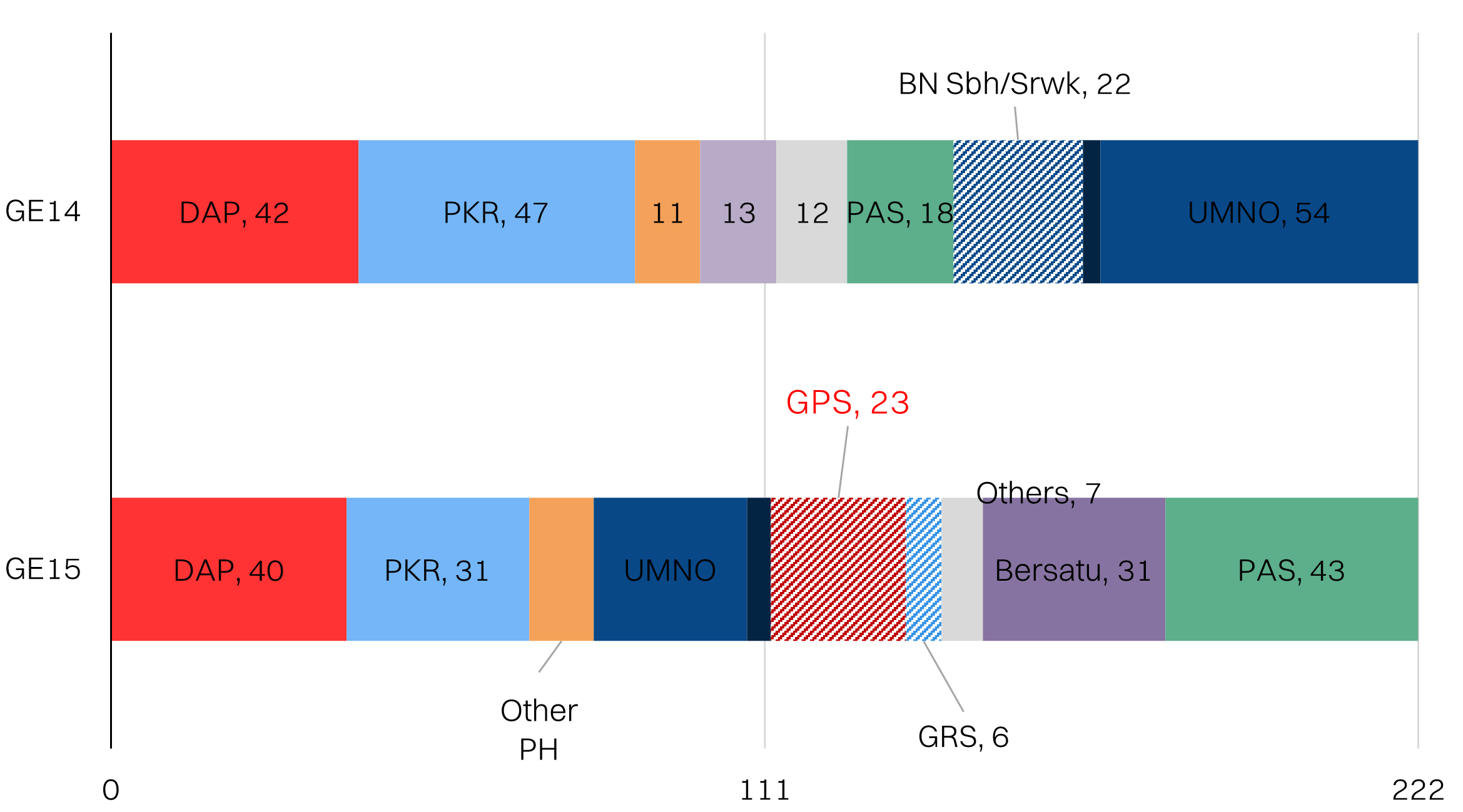
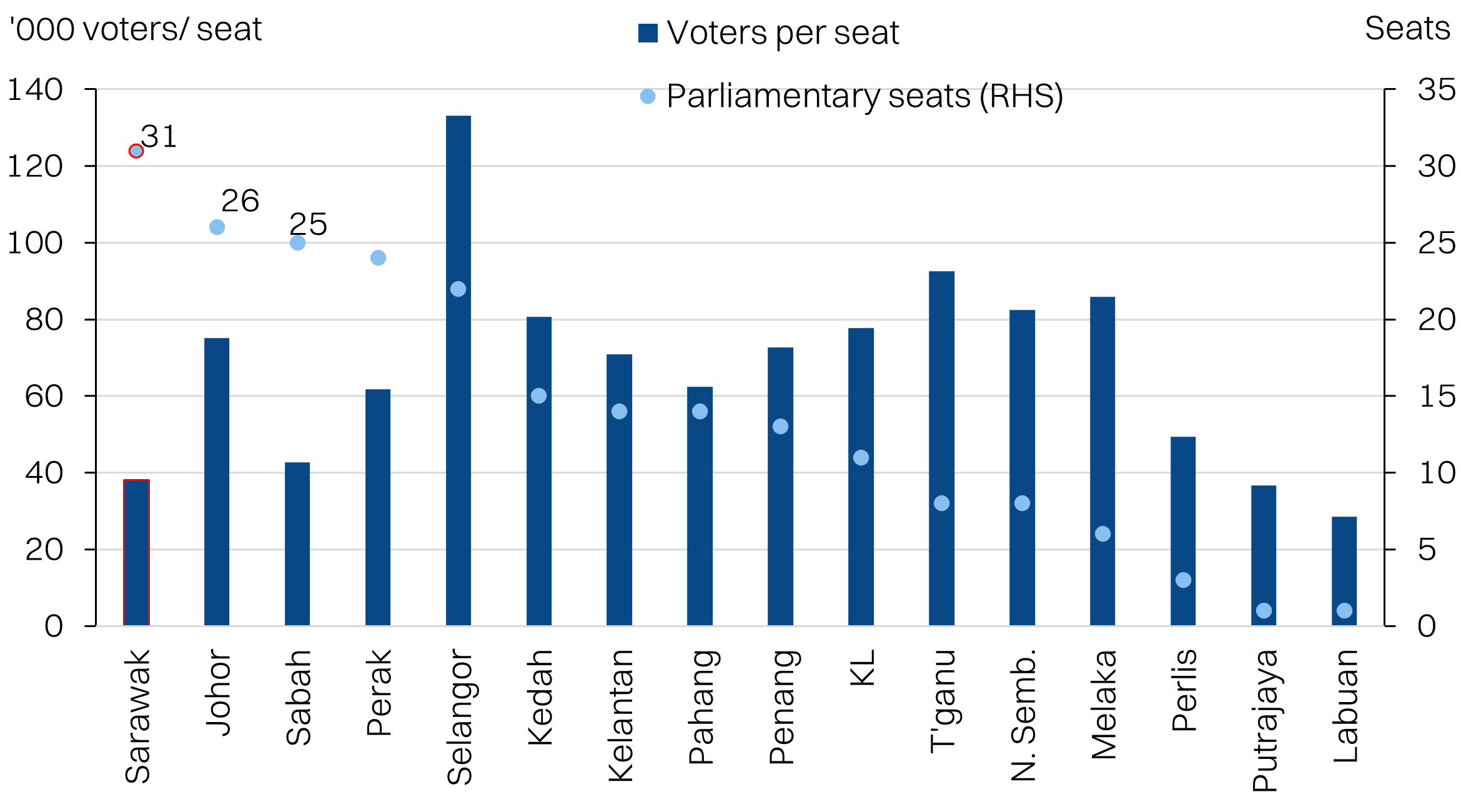
Source: SPRM, Bloomberg, NewParadigm Research, February 2026
Incrementally negative for the O&G sector
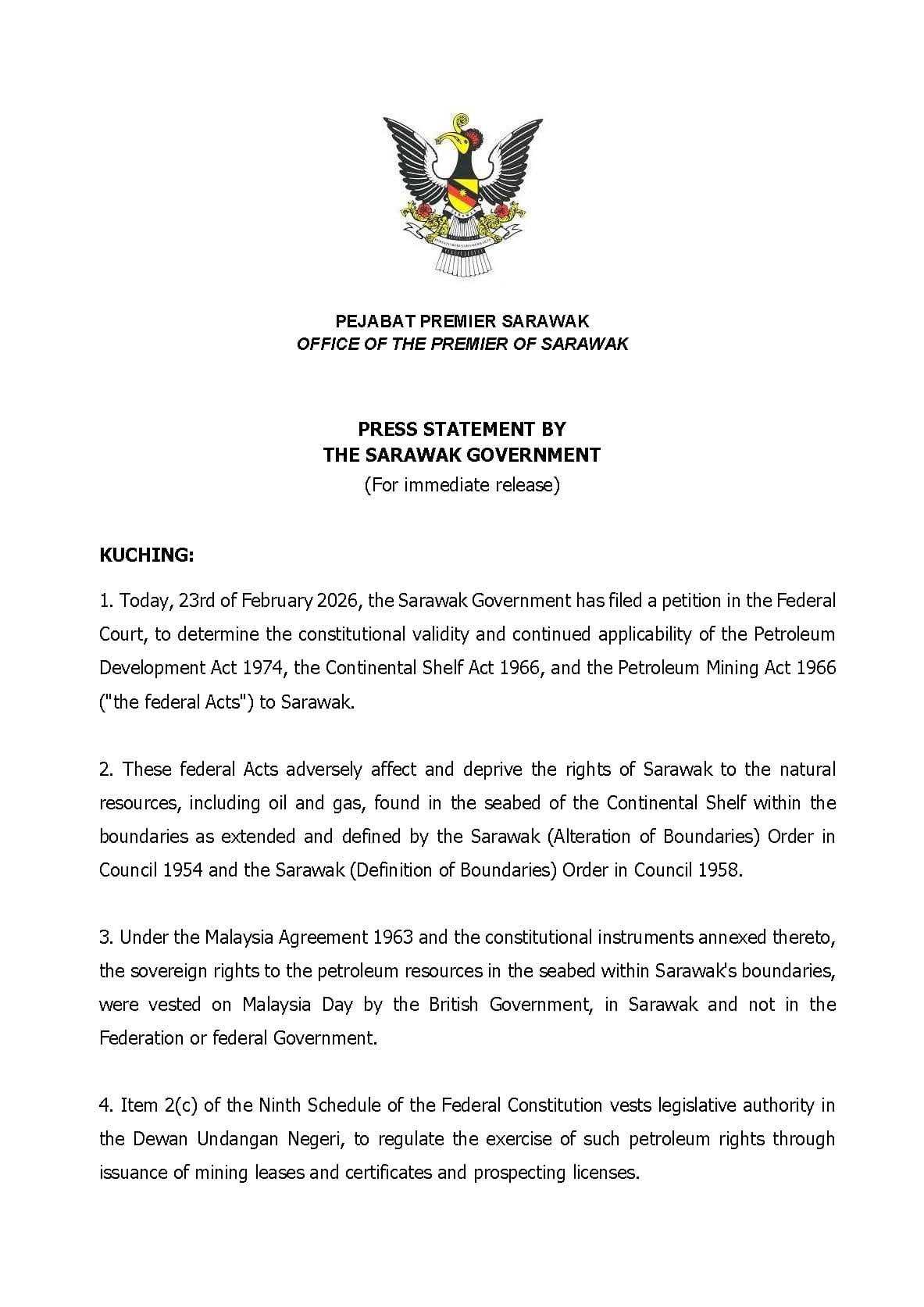
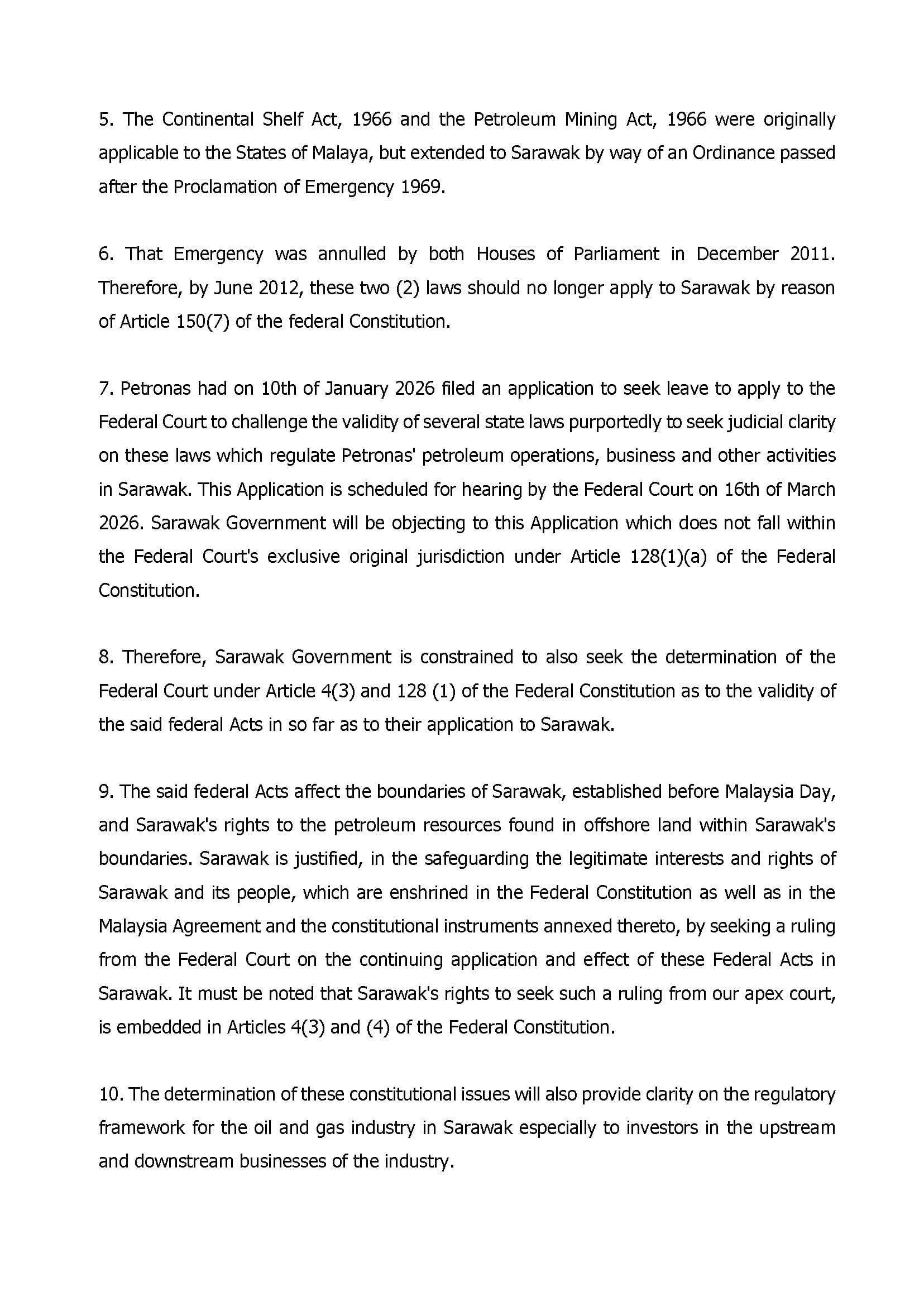
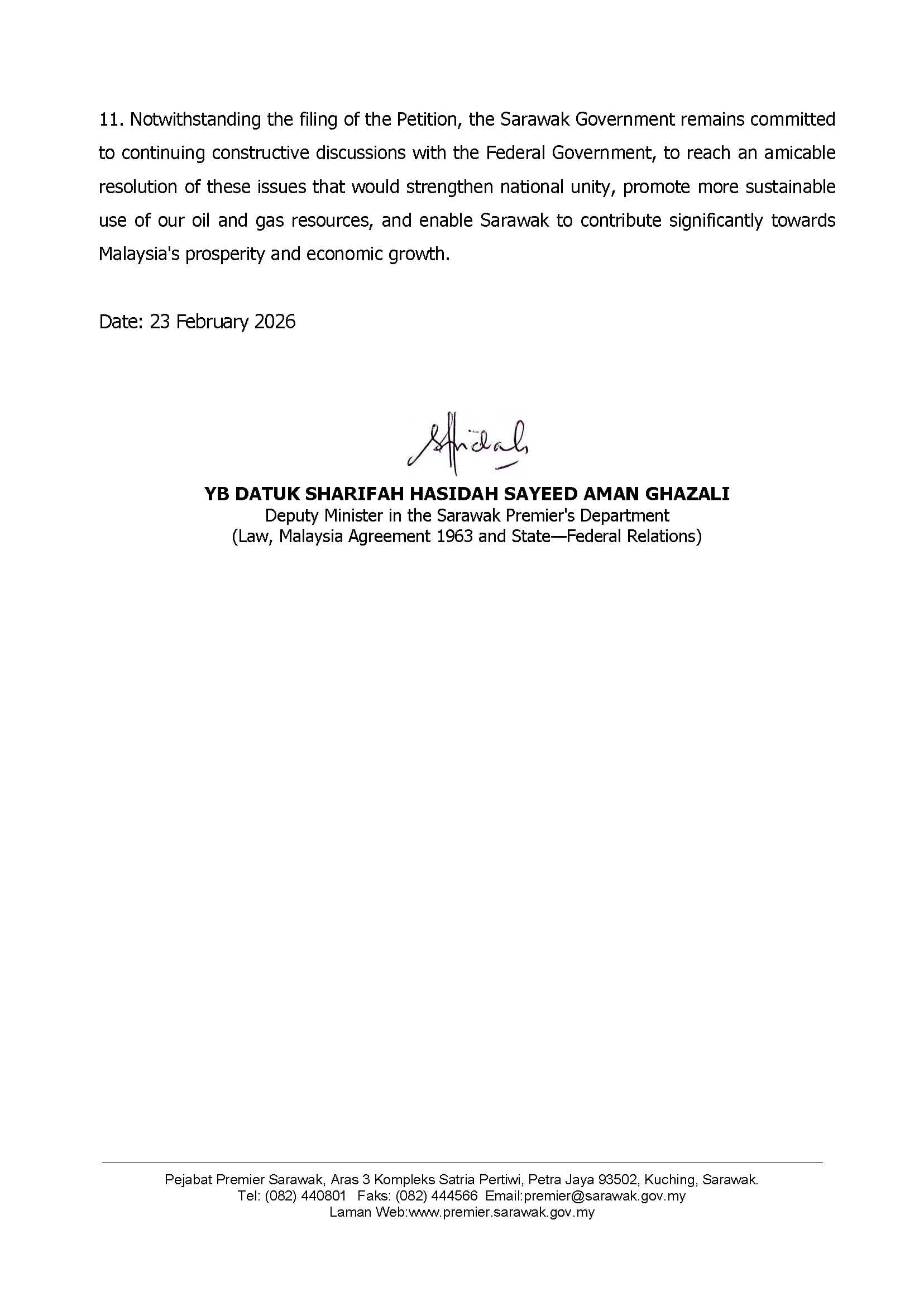
- Sarawak’s Government has filed a petition in the Federal Court to determine the constitutional validity of the PDA (1974) and the PMA (1966), with regards to Sarawak.
- We’ve attached the full press statement below. Sarawak appears to be challenging the applicability of the aforementioned acts, which currently confers mineral rights in the state to Petronas.
- Sarawak State’s filing with the apex court follows Petronas’ own filing (16 Jan), where the latter is seeking clarity on the legal position “legal position applicable to Petronas’ operations in Sarawak”.
- For context, Sarawak holds ~60% of Malaysia’s gas reserves and accounts for 73% of Petronas’ LNG sales.
- We see this as a further escalation in the long-running State-Federal dispute and incrementally negative for the O&G sector. At the very least, it appears to run counter to constructive dialogue/negotiations. In turn, the uncertainty will continue to chill investment in the sector, which directly hurts O&G companies.
- Additionally, the outcome appears to be fairly zero-sum, in our view. Any incremental commercial value gained by Sarawak State will come at a cost to Petronas.
Political settlement is more likely
- We aren’t legal experts in constitutional law, so we will not try to predict the outcome if this dispute is taken to its conclusion at the apex court. However, we anticipate that a political settlement could be a more likely pathway.
- As flagged in our first Politics, Policy, Profits report, the incremental political fragmentation in Peninsula Malaysia is shifting more political leverage towards the Borneo states of Sabah and Sarawak. Simply, it might be difficult for Peninsula-based coalitions to form a government with a simple majority with support from Sarawak (and Sabah).
- Compared to the current state of uncertainty, a clear and lasting resolution would be positive for the sector. Even if there is a rebalancing of development rights, as long as investment flows again, it would be a catalyst for the O&G sector.
- For now, we recommend a cautious approach on the sector. But at the right price, politically agnostic names could be positioned as a good call option on a State-Federal resolution.
The full press statement by the Sarawak Government
Source: Sarawak State Government
Recap: from negotiation to escalation
- Late 2024: The dispute turned commercial. Petros appointed itself sole gas aggregator in Sarawak, then refused to pay Petronas for gas supplied in August 2024, arguing Petronas lacked a valid licence under the DGO (Distribution of Gas Ordinance 2016) to supply gas in Sarawak. Petronas then called on a bank guarantee provided by Petros. This triggered a series of lawsuits. Shell MDS, which received competing invoices from both Petronas and Petros for the same gas supply, became caught in the crossfire.
- May 2025: A political declaration — short-lived relief. Prime Minister Anwar Ibrahim and Sarawak Premier Abang Johari Openg signed a Joint Declaration in May 2025 affirming the co-existence of the PDA and the DGO, designating Petros as aggregator for domestic gas while Petronas handles LNG exports. PM Anwar publicly declared the matter "resolved." However, the two companies have yet to sign a formal commercial agreement, and disagreements over how to interpret and implement the Joint Declaration quickly resurfaced.
- October 2025: Courts reassert federal primacy. In October 2025, the Court of Appeal lifted injunctions that had shielded Shell MDS from the competing payment claims, and the decision was widely interpreted as reinforcing the legal primacy of the federal Petroleum Development Act 1974 over Sarawak's state-level laws, including the DGO.
- October 2025: Petronas goes to the Kuching High Court. Petronas filed a separate legal proceeding in Kuching High Court to challenge Petros' status as sole gas aggregator.
- December 2025: Government signals a 2026 resolution target. Deputy Prime Minister Fadillah Yusof indicated in December that the government was targeting a comprehensive resolution to the dispute in early 2026, reflecting a growing consensus that sustained legal uncertainty could damage investor confidence and undermine Malaysia's energy sector.
- January 12, 2026: Petronas filed a motion with Malaysia's apex Federal Court to determine its right to operate in Sarawak, threatening to extend a dispute over gas assets that has dragged on for over a year. The court case seeks legal clarity on Sarawak's 2024 decision to grant full rights over its gas assets to Petros, citing concerns it may impact Petronas' LNG operations. Petronas framed it as seeking "regulatory certainty," insisting it was not meant to challenge Sarawak's development aspirations. The Federal Court set March 16, 2026 as the date to decide on granting Petronas leave to proceed. Both the federal and Sarawak governments were named as respondents.
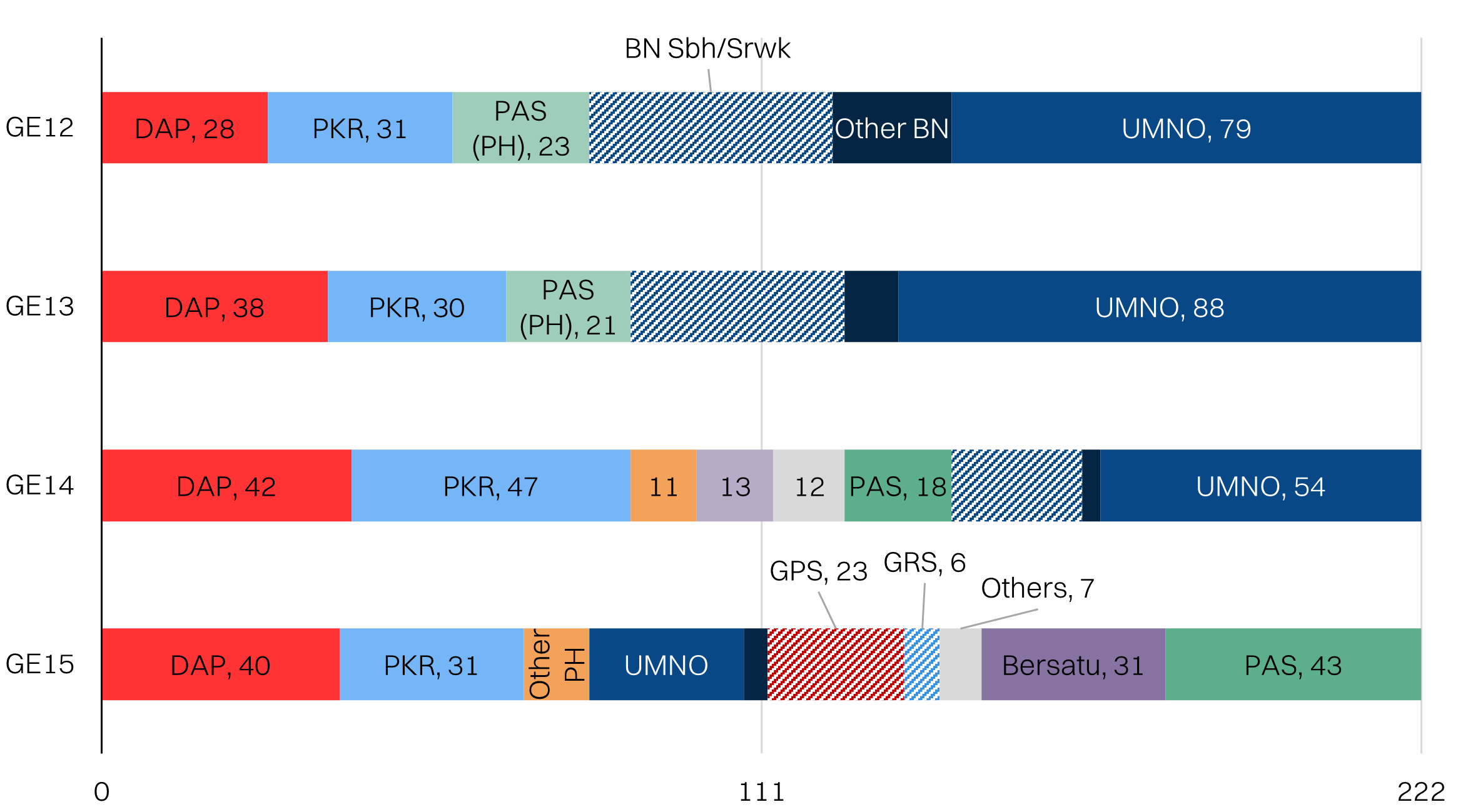
A recap on election results
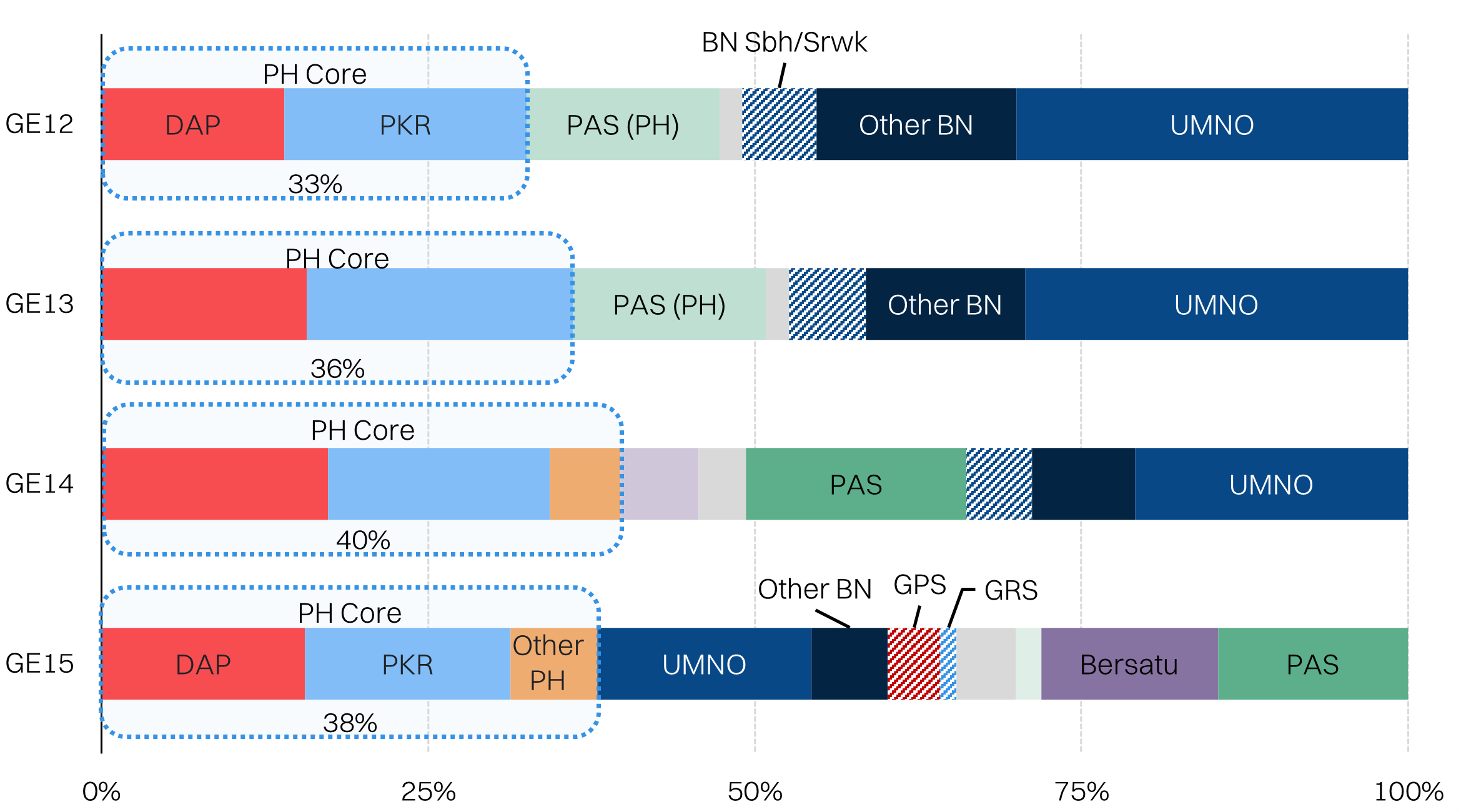
GE15 marked a significant shift in Malaysia politics when it resulted in a hung parliament. PH saw a drop in vote share for the first time since GE11 and PAS under the PN banner bagged the single largest block of seats at 43.
Looking back: GE11-14 could be characterized as the gradual consolidation of the opposition chipping away at the once dominant incumbents, BN. We’d distill this era of politics by the oppositions mostly pro-reform and anti-BN rhetoric that culminated in a vote against the 1MDB corruption scandal that finally toppled BN in 2018. Another key trend during this period that weakened BN was the fragmentation of the ethnic Malay vote that had 3 or more candidates contesting.
What changed: GE15 saw a consolidation of the Malay vote with PAS and Bersatu working together under the PN banner, which drove the huge losses by UMNO and PKR. Without a clear establishment to rally against, political rhetoric became more polarized and charged along nationalist and racial issues. Interestingly, PAS’ gain in parliamentary seats (+11ppt) disproportionately outperformed the -2ppt drop in vote share compared with GE14.
Share of votes | Share of seats
Source: SPRM, NewParadigm Research, February 2026